Improving fleet efficiency has become a key priority for shipowners and fleet managers looking to reduce fuel consumption, improve operational performance and get more value from existing assets. But efficiency is not determined by the engine or fuel consumption alone. It results from the interaction between hull hydrodynamics, propulsion system, propeller performance and the actual operating profile of each vessel. Understanding these relationships is essential to improving fleet fuel efficiency. CFD analysis can reveal where performance is being lost and identify potential improvements before any physical modifications are made.
Contenidos
- 1 What Is Fleet Efficiency?
- 2 How Is Fleet Efficiency Measured?
- 3 What Factors Affect Vessel Fleet Efficiency?
- 4 Why Is Fleet Fuel Efficiency Important?
- 5 How CFD Helps Improve Fleet Efficiency
- 6 A Real Example: When an Energy Saving Device Delivered No Efficiency Gain
- 7 How to Improve Fleet Efficiency Step by Step
- 8 How to Increase Fleet Efficiency Across Multiple Vessels
- 9 The Role of Data Quality in Fleet Efficiency Analysis
- 10 How VICUSdt Helps Improve Fleet Efficiency
What Is Fleet Efficiency?
In the maritime context, fleet efficiency describes how effectively a fleet performs its required operations while using fuel, energy, power and other resources. It should be assessed both at individual vessel level and across the fleet as a whole, considering technical performance alongside actual operating conditions and operational requirements.
This distinction matters because two vessels that appear similar on paper may behave differently in service. Differences in hull condition, propulsion performance, loading, speed, route and operating profile can all affect hydrodynamic performance and fuel consumption. For this reason, improving vessel fleet efficiency requires more than applying the same measures across every ship. Each vessel needs to be understood in the context of how and where it actually operates.
How Is Fleet Efficiency Measured?
There is no single metric that can fully represent fleet efficiency. Fuel and energy consumption provide important information, but they need to be assessed alongside other parameters to understand how efficiently a vessel is actually operating. These include the relationship between speed and power, propulsive and transport efficiency, operating profile, loading condition, and hull and propeller performance.
The analysis also needs to account for changes in operating and environmental conditions. A vessel may perform efficiently at a particular speed or loading condition but require significantly more power under a different operating profile or in more demanding sea conditions. Comparing performance across these scenarios helps distinguish normal variations from areas where energy is being lost.
For this reason, measurement becomes much more valuable when operational data is combined with technical analysis. Through ship performance analysis, data collected during operation can be used to assess the vessel’s actual energy performance and identify the factors behind higher fuel or power demand.
VICUSdt combines onboard data collection and energy audits with hydrodynamic assessments to understand how vessels perform in real operating conditions. This approach helps identify the main sources of inefficiency and provides a technical basis for evaluating potential energy and fuel savings.
What Factors Affect Vessel Fleet Efficiency?
The final performance of a vessel is the result of multiple factors acting together. Hull hydrodynamics, propulsion, operating profile and environmental conditions all influence the amount of power and fuel required to perform a given operation. Understanding these interactions is therefore essential when assessing vessel fleet efficiency and identifying where meaningful improvements can be made.
Hull resistance
Hull resistance determines how much power a vessel needs to maintain a given speed. It is influenced by the geometry of the hull, draft, trim and loading condition, as well as by appendages and the way the hull interacts with the surrounding flow.
The condition of the hull also matters. Fouling and increased surface roughness can add resistance over time, increasing the power required to achieve the same operating speed. Evaluating these effects helps determine whether higher energy demand originates from the hull itself or from other parts of the vessel.
Propeller and propulsion efficiency
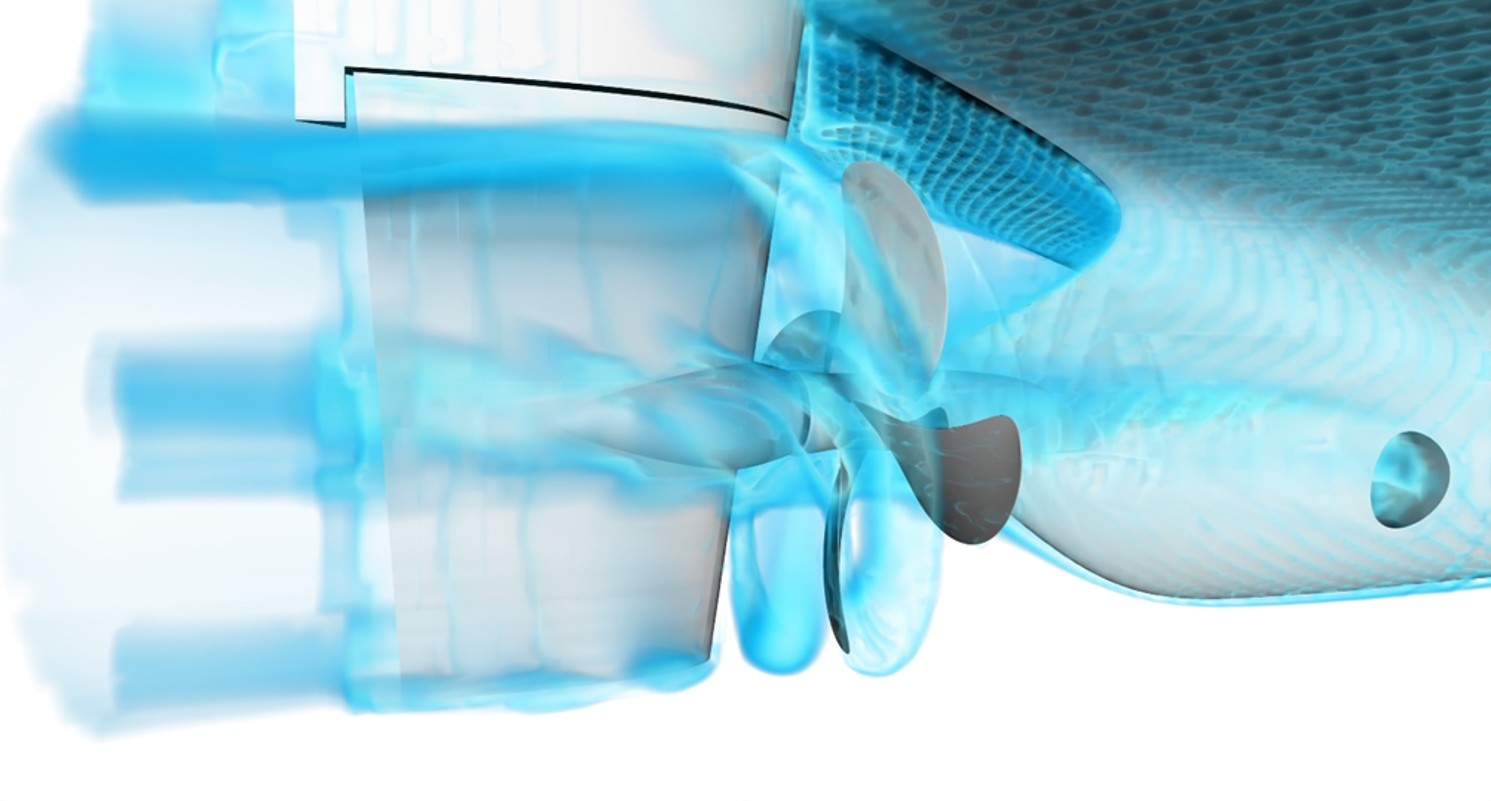
The efficiency of the propulsion system depends on much more than engine performance. Propeller design, diameter and pitch, wake field, cavitation and propeller condition all influence how effectively the power delivered by the engine is converted into useful thrust.
The interaction between the hull, propeller and rudder is equally important. These components operate as part of the same hydrodynamic system, so assessing them in isolation can provide an incomplete picture of performance. A well-integrated propulsion system aims to make effective use of the available power while limiting energy losses throughout the propulsion chain.
Operating speed and vessel profile
Vessels rarely spend their entire working life operating at a single design point. Service speed can vary with route, schedule and operational requirements, while changes in loading condition affect both resistance and propulsion. The amount of time a vessel operates at different speeds and power levels also determines its overall energy demand.
For this reason, optimizing a vessel exclusively for one design condition may not deliver the greatest benefit in actual service. Its real operating profile, including typical routes, loading conditions and power ranges, needs to be considered when evaluating opportunities to improve fleet efficiency.
Weather and sea conditions
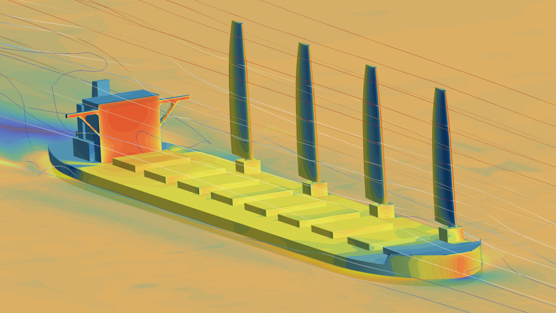
Waves, wind and other environmental conditions can significantly change vessel performance. They can increase resistance, alter propeller loading and raise the power required to maintain speed, with a corresponding impact on fuel consumption.
Assessing performance under representative navigation conditions provides a more realistic understanding of how a vessel behaves throughout its operation. This is particularly relevant when comparing ships or evaluating potential improvements, as performance measured in ideal conditions may not reflect the energy demand experienced under real operating conditions.
Why Is Fleet Fuel Efficiency Important?
Improving fleet fuel efficiency means reducing the amount of fuel required to perform a given operation without compromising the vessel’s operational requirements. This can directly reduce operating costs and improve vessel profitability, while also supporting greater energy efficiency, operational range and lower emissions.
Fuel savings also influence the return on investment of efficiency measures. Even relatively small improvements can become significant when they are maintained over time, particularly for vessels with high annual operating hours. When similar opportunities are identified across several ships, the cumulative effect can make a meaningful difference at fleet level.
For this reason, fleet fuel efficiency should be evaluated in the context of each vessel’s actual operation. Understanding where energy is being used and where losses occur makes it possible to focus investment on measures with a clear technical basis and assess their potential benefits before implementation.
How CFD Helps Improve Fleet Efficiency
CFD provides a detailed way to understand how water and air interact with a vessel and how those interactions affect its performance. By reproducing the flow around the hull, propeller and other components in a virtual environment, engineers can investigate the causes of energy losses and evaluate different configurations before physical modifications are made.
Through CFD hydrodynamics, simulations can be used to analyse resistance, wake characteristics and propulsion performance under different conditions. This makes it possible to compare potential modifications and understand how changes in one part of the vessel may affect the overall hydrodynamic and propulsive response.
One of the main advantages of using CFD to improve fleet efficiency is that the analysis can be adapted to each vessel. Instead of assuming that the same solution will work across an entire fleet, simulations can consider the specific geometry, operating profile and relevant operating conditions of each ship. This provides a stronger technical basis for identifying improvements that are suited to how the vessel actually operates.
Hull optimization
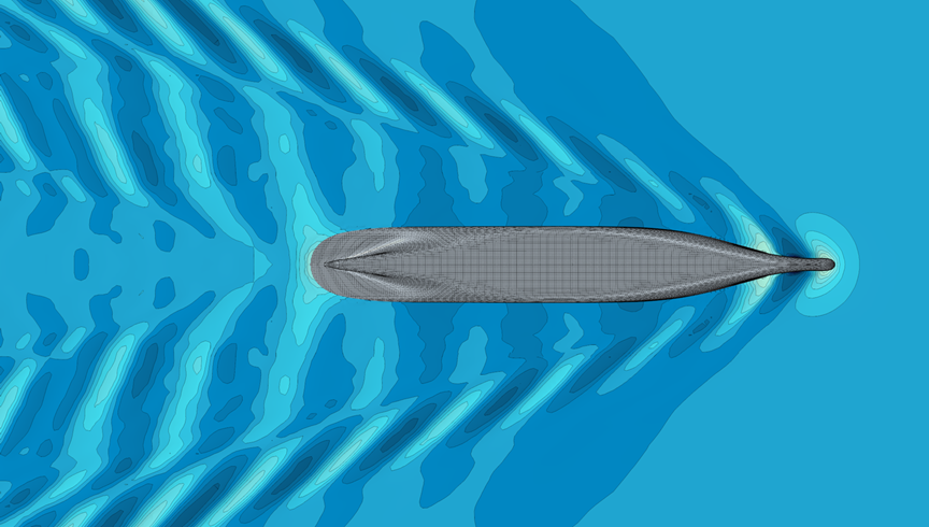
CFD can be used to predict hull resistance and investigate how changes in geometry affect vessel performance. Different alternatives can be evaluated virtually, including hull form modifications, bulbous bow redesign, trim optimization and changes to appendages. Wake field analysis can also reveal how the flow leaving the hull affects the components located downstream.
Rather than optimizing these elements for a single theoretical condition, different configurations can be compared across representative speeds, drafts and loading conditions. This helps identify the solution that provides the most consistent benefits for the vessel’s actual operating profile.
Propeller and propulsion system optimization
Propulsion performance depends on the interaction between the hull, propeller, rudder, appendages and the wake in which the propeller operates. CFD makes it possible to study these elements together and assess how changes to one component influence the rest of the system.
Simulations can predict thrust and torque, evaluate propeller efficiency and investigate cavitation and pressure pulses. They can also provide detailed information about hull-propeller interaction, helping engineers understand whether available power is being converted into thrust effectively.
This system-level approach is particularly valuable when developing ship propulsion solutions, as optimization can consider the complete propulsion system rather than treating the propeller, hull or appendages as isolated components.
Energy Saving Devices
Energy Saving Devices (ESDs) are designed to reduce hydrodynamic losses and improve propulsive efficiency by modifying the flow around the hull, propeller or propulsion system. Depending on the application, they can act on the wake entering the propeller, recover rotational energy or improve the interaction between different components.
Their effectiveness, however, depends on the specific vessel. Hull geometry, wake characteristics, propeller design, operating profile and the position and geometry of the device all influence its performance. Installing an ESD therefore does not automatically result in an efficiency improvement.
CFD can be used to assess this interaction before installation and compare alternative designs and configurations. This is particularly important when selecting and optimizing energy saving devices for ships, allowing the device to be adapted to the hydrodynamic characteristics and operating requirements of each vessel.
Performance in real sea conditions
Ships rarely operate exclusively in calm water or under a single loading and speed condition. Waves and changes in operation can alter resistance and propulsion loading, affecting the power required to maintain the desired performance.
CFD can be used to investigate additional resistance in waves, changes in propulsion loading and vessel behaviour at different drafts and speeds. Simulating representative operating conditions provides a more realistic basis for evaluating potential modifications and understanding how their benefits may change outside the design point.
This broader approach helps increase fleet efficiency by focusing optimization on conditions that are closer to those the vessel regularly encounters in service, rather than relying exclusively on idealized calm water performance.
A Real Example: When an Energy Saving Device Delivered No Efficiency Gain
A practical example shows why efficiency measures need to be evaluated for the specific vessel on which they will operate. A 180,000 DWT Capesize bulker had been fitted with an Energy Saving Device with the expectation of reducing fuel consumption. However, subsequent CFD resistance and self-propulsion studies showed that the device was providing virtually no improvement in overall performance.
The result did not mean that Energy Saving Devices are ineffective. Instead, it highlighted the importance of understanding how a particular solution interacts with the vessel’s hull geometry, wake and propulsion system. A device that performs well on one ship may not deliver the same benefit on another, even when the vessels appear comparable.
The case also illustrates the risk of relying on general performance estimates when assessing an efficiency upgrade. CFD can provide an independent way to validate the expected hydrodynamic benefit, compare performance with and without the proposed modification, and determine whether the improvement is likely to justify the investment.
Carrying out this analysis before a retrofit provides a stronger basis for evaluating return on investment and helps avoid modifications that may offer little benefit in practice. For shipowners looking to increase fleet efficiency, the key is not simply to add efficiency technologies, but to verify that each solution is appropriate for the vessel, its propulsion system and its actual operating profile.
How to Improve Fleet Efficiency Step by Step
To improve fleet efficiency effectively, it is important to follow a structured process that combines operational data, technical analysis and validation. The goal is to identify where performance is being lost, assess which changes are most promising and confirm that the expected benefits are achieved in service.
Collect reliable operational data
The first step is to build an accurate picture of how each vessel is actually operating. Relevant data can include fuel consumption, speed, power, loading condition, draft and operating profile, together with information about hull and propeller condition.
Reliable data provides the baseline needed to understand current performance and distinguish persistent inefficiencies from normal variations caused by operating conditions.
Identify the main sources of inefficiency
Once the operating baseline is established, the next step is to determine where the main losses occur. These may be linked to hull resistance, propeller performance, propulsion system integration, vessel trim, appendages or the way the vessel is being operated.
This stage is essential because different causes require different solutions. Higher fuel consumption, for example, does not automatically indicate an engine-related problem if the main source of additional power demand is hydrodynamic.
Simulate potential improvements
CFD can then be used to compare potential modifications before they are implemented. Different hull, propeller, appendage or propulsion configurations can be evaluated under representative operating conditions to understand their expected effect on resistance, propulsion performance and energy demand.
Virtual comparison helps reduce uncertainty and provides a technical basis for selecting the most promising alternatives.
Prioritize improvements by potential impact
Not every modification offers the same balance between cost and benefit. Potential measures should therefore be assessed according to their expected efficiency improvement, required investment, operational impact and implementation complexity.
This makes it possible to focus resources on changes that offer the strongest technical and economic case rather than simply pursuing the largest theoretical performance gain.
Validate performance after implementation
The process should not end once a modification has been installed. Predicted improvements need to be compared with operational data and real measurements to confirm whether the expected performance has been achieved.
Post implementation validation also helps identify differences between predicted and actual results, refine future analyses and build a stronger basis for efficiency decisions across the rest of the fleet.
How to Increase Fleet Efficiency Across Multiple Vessels
Once individual vessel performance is understood, the same methodology can be extended across the fleet. The objective is to increase fleet efficiency by identifying common patterns and prioritizing the areas where technical analysis and investment can have the greatest impact.
A practical approach is to begin with representative vessels and determine which sources of inefficiency occur repeatedly across the fleet. This can help distinguish improvements that may be applicable to several ships from those that require a vessel-specific solution. Vessels with higher fuel consumption, intensive operating profiles or greater potential for improvement can then be prioritized for more detailed assessment.
Before extending a technology or modification to additional vessels, its performance should be evaluated against the characteristics of each ship. Results obtained for one vessel can provide useful information, but differences in hull geometry, propulsion system, loading conditions and operating profile may lead to a different hydrodynamic response.
Operational data can then be used to continuously refine these decisions as vessel performance and operating requirements evolve. In this way, a fleet-level strategy can support broader efficiency objectives while still accounting for the technical characteristics and actual performance of each vessel.
The Role of Data Quality in Fleet Efficiency Analysis
The reliability of any fleet efficiency analysis depends heavily on the quality of the information used as input. Even an advanced simulation can produce results with limited practical value if the vessel, propeller or operating conditions are not represented accurately.
Reliable analysis starts with an accurate description of the vessel itself, including hull and propeller geometry, hull roughness and the actual condition of the ship. Operational information is equally important. Loading conditions, operating profiles, speed and power data help establish how the vessel performs in service and which scenarios should be considered during the assessment.
The objective is not to build the most complex CFD model possible, but to model the factors that have a meaningful influence on performance with the appropriate level of detail. Combining reliable vessel data with representative operating conditions provides a stronger basis for interpreting simulation results, identifying the causes of efficiency losses and evaluating potential improvements.
How VICUSdt Helps Improve Fleet Efficiency
VICUSdt combines naval engineering, CFD simulation and performance analysis to identify opportunities to improve fleet efficiency at both individual vessel and fleet level. The process starts with understanding how each ship actually operates and where energy losses occur before determining which measures are worth investigating further.
Depending on the vessel and the objective of the project, this can involve energy audits and operational data analysis, hull resistance assessment, CFD hydrodynamics, propeller optimization and propulsion system analysis. Energy Saving Devices and other retrofit options can also be evaluated before implementation, while performance prediction and subsequent validation help determine whether the proposed solution can deliver the expected benefit.
Through its energy efficiency solutions for shipowners, VICUSdt works with shipowners to assess vessel and fleet performance based on real operating profiles. The objective is not simply to identify possible modifications, but to determine which solutions can provide measurable improvements under the conditions in which each vessel actually operates.
If you are considering ways to improve the performance of your fleet, VICUSdt can help identify where efficiency is being lost and assess potential optimization measures before committing to a retrofit or investment. Contact our team to discuss your fleet and evaluate which opportunities are worth pursuing.
Don’t want to miss our news?!
Follow us on LinkedIn to stay updated on upcoming events, insights, and maritime efficiency solutions.