Industries
We’ll be pleased to answer your questions
CFD Engineering for Navy & Patrol Vessels
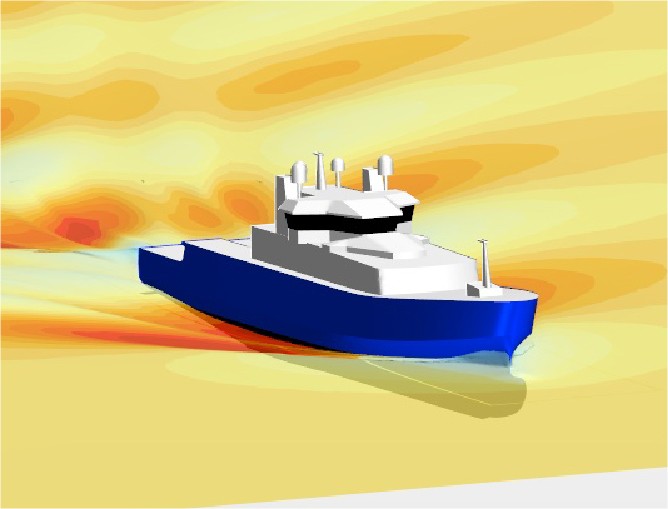
Naval and patrol vessels operate in extreme conditions that demand maximum seakeeping, stealth, and reliability. At VICUSdt, we provide advanced CFD engineering for patrol vessels and navy vessels to meet these critical performance requirements. Our hydrodynamic, propulsive, and aerodynamic simulations cover resistance prediction, seakeeping analysis, propulsion optimization, and tactical performance to help ensure mission success. From hull resistance analysis and crash-stop performance to silent propeller design and exhaust gas aerodynamics, our CFD-driven approach enables naval architects and defense operators to enhance vessel performance, safety, and tactical abilities with precision and consistency. Trusted by Navantia, Kership, the Italian Coast Guard, Dutch Navy, Peruvian Navy, and Indian Navy.
Why CFD Engineering Is Critical for Patrol Vessels and Navy Operations
Navy patrol vessels operate in high-stakes environments—where stealth, tactical maneuverability, and efficiency are crucial. CFD engineering for navy patrol vessels is essential to analyze and enhance every aspect of vessel behavior, from resistance and maneuverability to acoustic signature. VICUSdt has successfully conducted CFD-based resistance, tactical diameter, and crash-stop analyses for Landing Platform Docks (LPDs), ensuring effective maneuvering under operational constraints.
Our CFD-driven designs of silent propellers for minehunters reduce acoustic detectability, while hull form and appendage optimization improves hydrodynamic efficiency in patrol boats. Seakeeping analyses, including streamline simulations around gondolas, enhance operational safety in rough seas. Additionally, our aerodynamic simulations of corvette exhaust gas behavior and anti-ship missile launches contribute to thermal signature management and ship-life safety.
These CFD insights allow shipyards and naval authorities to make informed decisions during design, refit, before physical trials or operational upgrade phases, particularly for navy patrol vessels and fast-response craft, minimizing cost, risk, and operational downtime.
Feasible CFD Improvements for Patrol Vessels
At VICUSdt, we offer in-depth CFD analysis and engineering for patrol vessels and other naval craft. Our services aim to optimize ship performance and mission capability, covering:
Trusted by Naval Clients Worldwide
We are proud to support leading naval organizations in improving patrol vessel performance. Clients like Navantia, Kership, the Dutch Navy, Peruvian Navy and Indian Navy trust our CFD expertise to enhance the reliability and tactical capabilities of their navy patrol vessels.